
How to Get Into the Google Maps Top 3 in St. Louis: Specific Tips That Work in 2026
Last updated:
Quick Answer
The Google Maps top 3 is where St. Louis customers decide who to call. Here are the specific, step-by-step tactics to break in - not theory, not generic advice, but the exact moves that get St. Louis businesses into the map pack.
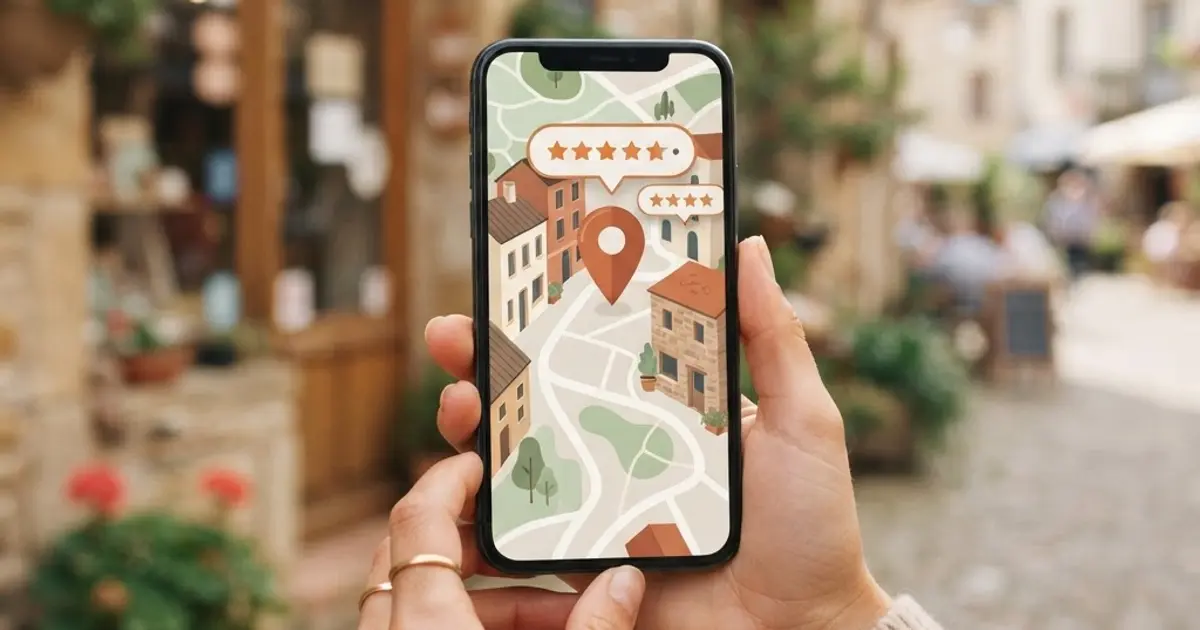
Let's be direct: the Google Maps top 3 in St. Louis is worth more to a local service business than any other marketing asset you could have. People searching for HVAC repair, personal injury attorneys, chiropractors, or restaurants on Google are going to call one of the top three results in the map pack. That's just the reality of how people search.
Breaking into that top 3 is not random. It's not about "tricks." It's a system - and when you understand the system, you can work it deliberately. Here are the specific steps that actually move the needle for St. Louis businesses.
Step 1: Audit Your Current GBP Before You Change Anything
Before you touch anything, know where you stand. Log into your Google Business Profile and look at your Insights tab. How many people are finding you via search vs. browsing? What search terms are they using? How many are clicking for directions vs. calling? This baseline data tells you what's working and what's broken.
Common audit findings that kill St. Louis map pack rankings: wrong primary category, missing secondary categories, less than 20 photos, no posts in the last 30 days, under 10% review response rate, NAP inconsistencies between the GBP and the website.
Step 2: Category Selection Is the Single Biggest Lever
Your primary Google Business Profile category is the most important ranking factor you can directly control. Get it wrong and you won't appear for your most valuable searches. Get it right and everything else builds on a solid foundation.
Tips: Your primary category should match the single most valuable search term for your business. If you're an HVAC company, that's "HVAC Contractor" - not "Air Conditioning Contractor" or "Heating Contractor." For secondary categories, add every related service you actually offer. A plumbing company should have secondary categories for "Drain Cleaning Service," "Water Heater Installation," and "Emergency Plumber" if those apply.
Step 3: Your Business Description Has 750 Characters - Use Every Single One
Most business descriptions in St. Louis are wasted. They say things like "We've been serving the St. Louis area for 20 years with quality service." That's not optimized - that's filler. Your 750 characters should: name your primary service and location in the first sentence, mention your top 3-5 service types, include a specific differentiator or credential, and end with a reason to call.
Example for a plumbing company: "Family-owned St. Louis plumber serving Chesterfield, Kirkwood, Webster Groves, and the Metro East since 2008. Specializing in emergency plumbing, drain cleaning, water heater installation, and whole-home repiping. Licensed, insured, same-day service available. 500+ five-star Google reviews. Call now for a free estimate - we answer 24/7."
Step 4: The Photo Strategy That Gets You More Map Pack Clicks
Photos do two things for your map pack performance: they influence Google's engagement signals (more photo views = higher engagement score = better ranking) and they influence whether someone who finds you in the map pack actually clicks to call you.
Tips: Upload real photos, not stock images. Google can detect stock images and they perform worse. For a service business: photos of your team in uniform, your vehicles with your branding, completed project results (before/after work especially well), and your physical location if you have one. Add new photos at least 2-3 times per week - consistency matters more than volume.
Step 5: The Review Velocity Trick That Outranks Competitors with More Reviews
Here's something most competitors don't know: a business with 40 reviews in the last 90 days will frequently outrank a business with 400 reviews collected over 5 years. Google weights recency heavily in its local ranking algorithm.
The practical system: within 48 hours of every completed job, send a two-touch review request - first a text (because it gets opened), then an email with a direct link. The text should be personal ("Hi [Name], it was great working with you today - if you have a minute, a Google review would really help our small team"). The email should have a big, obvious button that goes directly to your Google review form - zero friction.
Step 6: NAP Consistency Across the St. Louis Web Ecosystem
Your business name, address, and phone number need to be identical across every directory where you appear. Not similar - identical. "Suite 200" and "Ste. 200" are different in Google's eyes. "Chesterfield, MO 63017" and "Chesterfield, Missouri" are different.
Priority directories for St. Louis businesses: Yelp, Bing Places, Apple Maps, BBB, Angi, HomeAdvisor, the St. Louis Regional Chamber of Commerce directory, local neighborhood association websites, and your industry-specific directories. Every inconsistency is a small trust penalty that compounds.
Step 7: Make Calling You the Path of Least Resistance
Pull out your phone and open your own website. If you cannot see your phone number without scrolling, if it is not click-to-call, or if it takes more than one tap to dial, you are losing calls every day. Put the number in the header, make it the largest text element on mobile, and make tapping it open the dialer. Then turn on Google Business Profile messaging for the customers who would rather type than talk, and answer inside an hour: your response time is shown publicly on the listing, and a fast one converts undecided prospects. If you use any scheduling tool, add the booking link to your profile so someone who finds you in the map pack can book without leaving Google.
Step 8: The Post Rotation Google Rewards
Most St. Louis businesses either never post or post in bursts. A four-week rotation keeps the listing active and gives people a reason to click: week one, a result from a real job with the neighborhood named; week two, a genuinely useful tip tied to your service; week three, something that connects you to St. Louis specifically, like a team sponsorship or a neighborhood event; week four, the question your intake team hears most, answered properly. Once a month, use the Offer post type instead of a standard update. It renders in a larger format with an offer banner, and it does not need to be a discount - a free estimate or priority scheduling works.
Step 9: Seed the Q&A Section Yourself
Your profile has a Q&A section where anyone can ask a question, including you. Ask from a personal Google account and answer from the business account, and you can pre-populate the questions your prospects actually hesitate over: do you serve Illinois, is there a charge for estimates, can you come out today, which parts of St. Louis do you cover. Each answer should be useful and should name the service and the places you serve. A prospect whose objection is answered on the listing does not leave to find the answer somewhere else.
Step 10: What to Do With Reviews After They Arrive
Respond to every review, and make the response do work. Instead of a generic thank-you, name the service and the neighborhood: thank them for the specific job, mention where it was, and invite their neighbors to call. That response is public, it is read by prospects deciding whether to call you, and it quietly reinforces the places you want to be associated with.
The request itself matters as much as the response. Most review requests fail because they are generic. Use three parts: a personal greeting with their name, a specific reference to the work you did, and a direct link so there is no friction. Send it within 48 hours of the job, while the experience is still fresh, and send it every time rather than in occasional batches.
Step 11: Fill In the Attributes Almost Every St. Louis Profile Leaves Empty
List every suburb and community you serve in the service area, because Google uses it for proximity across the metro. Keep hours scrupulously accurate, including holidays. Point the website link at a fast, mobile page about the specific service rather than the homepage. Make the phone number match your NAP exactly, in the same format as everywhere else. Add the booking link. And fill out the services section with real descriptions, because it is a direct relevance signal and it is the field most profiles leave as a bare list.
Step 12: Prove Which Calls Came From Google
Without call tracking you are guessing. Assign a tracking number to your Google Business Profile and you can see exactly how many calls the listing produced this month, separate from your website, your ads and your yard signs. That number is also what tells you whether any of the steps above are working, and it is the first thing to put in place if you have been making changes without it.
If you want the map pack work handled rather than attempted, our St. Louis SEO agency builds and runs this system for one client per trade per market.
Related Reading
If you'd rather hand the work to a local team, see how our St. Louis SEO agency approaches it.
Want to know exactly why you're not in the top 3 yet? A free audit will show you the specific gaps.
Founder & President, LeadValets — St. Louis, MO · 10+ years local SEO & AEO
Jonathan Floyd is the founder of LeadValets, a St. Louis-based SEO and AEO agency specializing in local search and AI search optimization for service businesses. His writing covers actionable SEO strategy grounded in real campaign data from competitive markets across the St. Louis metro and beyond.
Talk to LeadValets
Keep Reading
Related Articles
How Long Does SEO Take for Plumbing & HVAC?
Plumbing and HVAC companies may see early SEO movement in 3–6 months, such as improved rankings and more local visibility. Meaningful increases in qualified calls often take 6–12 months, while competitive markets can take longer. Your timeline depends on your website, competition, service area, and how consistently you invest in local SEO.

Fastest Way to Rank in a New Service Area
The fastest way to rank in a new service area is to create a dedicated, useful page for that location and support it with accurate local business details, relevant service-area content, and genuine local links and reviews. Make sure your Google Business Profile reflects your real operating area, then build consistent local signals over time. Avoid fake addresses or duplicate, thin pages—they can undermine rankings.
Rank in Multiple Cities With One Location: How To
You can rank in multiple cities with one business location by clearly defining your service area, building useful city-specific pages, and earning local links and reviews. Keep one accurate Google Business Profile tied to your real location, and don’t create fake addresses or duplicate listings. Results depend on genuine relevance and prominence in each city.